Campervan Lithium Battery Upgrade: Is It Worth It and What Else Needs Changing?
If you’ve spent any amount of time travelling in a campervan, you’ll probably recognise the moment. It’s late evening, you’ve parked somewhere beautiful, the kettle has just boiled, and you casually check your battery monitor… only to discover that your leisure battery is already halfway to retirement for the night. Suddenly the peaceful off-grid dream becomes a tense calculation involving the fridge, the lights, and whether charging your phone is really that important.
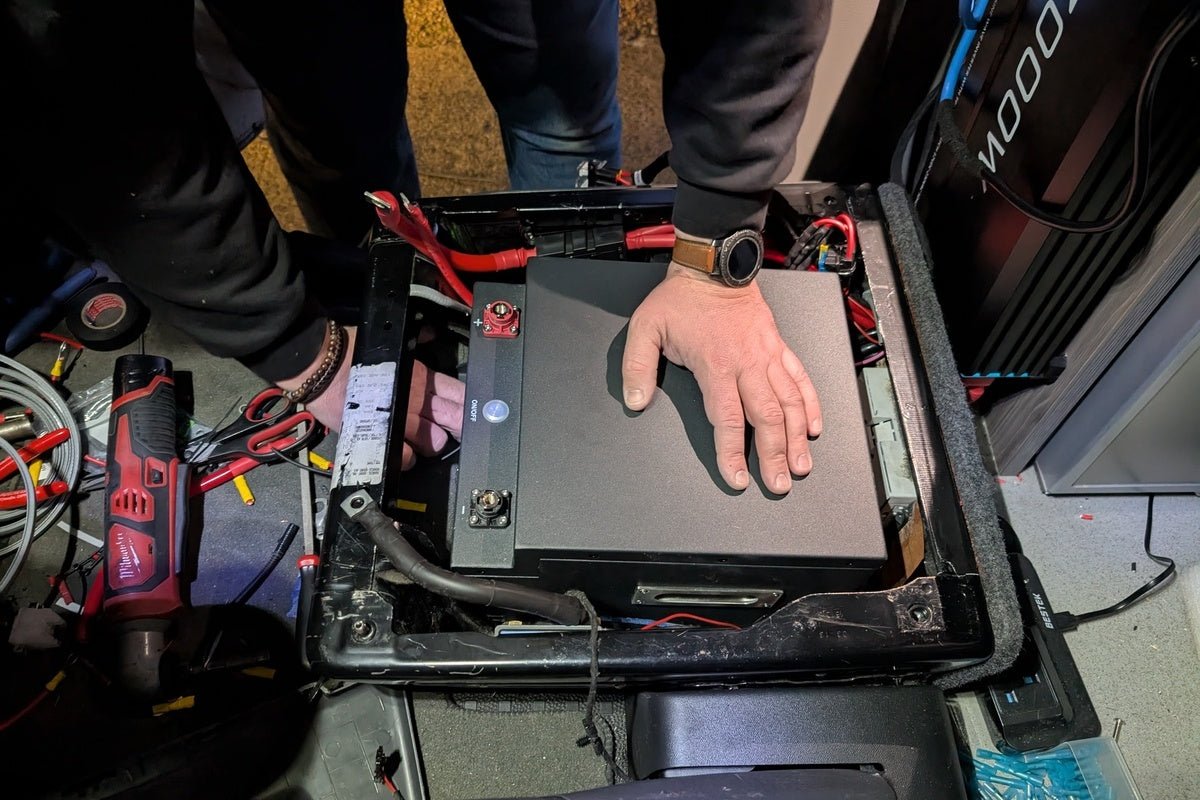
For many van owners, the solution is upgrading from a traditional lead-acid leisure battery to a lithium one, usually based on LiFePO4 (Lithium Iron Phosphate) chemistry. Lithium batteries have become increasingly popular in campervan electrical systems over the past few years, promising more usable power, faster charging, and longer lifespan.
However, upgrading isn’t quite as simple as swapping one battery for another. Lithium behaves differently from traditional batteries, and a proper upgrade usually involves thinking about the rest of your electrical system too. Before you take the plunge, it’s worth understanding when lithium makes sense, what benefits it actually provides, and what other upgrades may be required along the way.
The limitations of traditional campervan leisure batteries
Most campervans start life with a lead-acid leisure battery. Depending on the setup, this might be a flooded lead-acid battery, an AGM battery, or a gel battery. While these technologies are reliable and relatively affordable, they all share the same fundamental limitations.

The most significant issue is usable capacity. Although a battery might be rated at 100Ah, you can’t realistically use all of that power. Lead-acid batteries dislike being deeply discharged, and regularly taking them below about 50% capacity will dramatically shorten their lifespan. In practical terms, a 100Ah lead-acid battery usually provides closer to 50Ah of usable energy if you want it to last a reasonable amount of time.
Voltage behaviour is another factor. As a lead-acid battery discharges, its voltage gradually drops. This can cause problems with appliances that expect a stable power supply. Compressor fridges, diesel heaters, and inverters often start to struggle when voltage drops, meaning they may stop working long before the battery is technically empty.
Weight is also worth mentioning. Lead-acid batteries are heavy, and many campervan builds end up dedicating a considerable amount of space and payload to batteries that only deliver half their rated capacity.
Why lithium batteries have become so popular
Lithium leisure batteries solve many of the frustrations associated with traditional batteries. One of the biggest advantages is that almost the entire rated capacity can be used safely. A 100Ah lithium battery typically provides around 90-100Ah of usable power, effectively doubling the practical capacity compared to a lead-acid battery of the same size.
Lithium batteries also maintain a much more stable voltage during discharge. Instead of gradually dropping throughout the evening, the voltage remains relatively constant for most of the battery’s cycle. This keeps appliances running more reliably and avoids the frustrating situation where your fridge decides to shut down while the battery still technically has plenty of charge left.
Charging behaviour is another area where lithium excels. Lithium batteries can accept charge much more quickly than lead-acid batteries, which means solar panels and alternator charging can replenish the battery faster. On sunny days, it’s often possible to recover a large amount of energy in a surprisingly short time.
Perhaps the most impressive advantage, however, is lifespan. While many lead-acid batteries last a few hundred charge cycles, lithium batteries can often handle several thousand cycles. In real-world terms, this means a lithium battery may last ten years or more in a campervan system.
When upgrading to lithium makes the most sense
Lithium batteries tend to make the biggest difference for people who spend a lot of time off-grid. If you regularly wild camp or rely heavily on your leisure battery, the extra usable capacity and faster charging can dramatically improve the experience. Instead of constantly worrying about whether you’ll make it through the night, you gain a far more relaxed energy buffer.
They’re also particularly useful for vans that run more power-hungry appliances. Compressor fridges, diesel heaters, laptops, routers, and inverters all benefit from the stable voltage and higher usable capacity that lithium provides. Many people only realise how much power their van uses once they upgrade and see how much easier it becomes to keep everything running.
Another common scenario is repeated battery failure. If you’ve replaced AGM or lead-acid batteries several times over the years, lithium can actually work out cheaper in the long run due to its much longer lifespan.
That said, lithium upgrades aren’t essential for every van. If you mainly stay on campsites with electric hook-ups, or your electrical needs are limited to lights and phone charging, your existing system may already be perfectly adequate.
The parts of your system that may need upgrading

One of the most common misunderstandings about lithium upgrades is the assumption that you can simply swap out the battery and carry on as before. In reality, lithium batteries interact with charging systems differently, and some components may need to be updated to ensure everything works safely and efficiently.
The alternator charging system is often the first area to examine. Many older campervans use a simple split charge relay to connect the starter battery to the leisure battery while driving. While this works reasonably well with lead-acid batteries, lithium batteries can draw very high charging currents, which can put excessive strain on the alternator.
For this reason, many lithium upgrades include a DC-DC charger. This device regulates the current coming from the alternator and delivers an appropriate charging profile for lithium batteries. It also works far better with modern vehicles that use smart alternators.
Solar charging systems should also be checked. If your van already has solar panels, the charge controller needs to support lithium charging profiles. Many modern MPPT controllers include lithium settings, but older PWM controllers may not be suitable. Upgrading the controller can often improve charging efficiency as well.
Mains chargers are another component worth reviewing. If you occasionally charge your leisure battery from a campsite hook-up, the charger should ideally have a lithium charging mode. Lead-acid chargers follow different charging stages, and although some lithium batteries tolerate them, it’s generally better to use a charger designed for lithium chemistry.
Monitoring can also become more important with lithium systems. Because lithium batteries maintain a stable voltage for much of their discharge cycle, voltage alone doesn’t provide an accurate indication of state of charge. A shunt-based battery monitor can provide far more reliable information about how much energy is actually remaining.
Finally, cold weather behaviour is something to be aware of. Lithium batteries should not be charged below freezing temperatures. Many modern batteries include a built-in battery management system (BMS) that prevents charging when temperatures are too low, and some higher-end models even include internal heating elements.
Planning a balanced campervan electrical system
Once you upgrade to lithium, many van owners discover their electrical system suddenly feels far more capable. With greater usable capacity and faster charging, it becomes possible to support additional appliances without constantly worrying about power consumption.
This often leads to improvements elsewhere in the system, such as adding more solar panels, installing a proper battery monitor, upgrading charging sockets, or introducing a small inverter for occasional mains devices. It’s not uncommon for a simple battery upgrade to gradually evolve into a more capable and efficient electrical setup.
The cost question
The biggest barrier to lithium upgrades is usually the initial cost. A typical 100Ah AGM leisure battery might cost between £150 and £250, while a 100Ah lithium battery may cost several hundred pounds more.
However, the comparison isn’t entirely fair. Lithium batteries offer significantly more usable capacity, faster charging performance, and dramatically longer lifespan. When viewed over many years of use, the total cost can be much closer than it initially appears.
The bottom line
Upgrading your campervan to a lithium leisure battery can transform the way your electrical system performs. The increase in usable power, the stability of the voltage supply, and the speed of charging all make off-grid travel far easier and more enjoyable.
That said, the upgrade works best when approached as a system improvement rather than a simple battery swap. By considering your alternator charging, solar setup, and battery monitoring at the same time, you can build a system that is both efficient and reliable.
Do it properly, and you’ll spend far less time staring nervously at your battery monitor, and far more time enjoying the reason you bought the campervan in the first place. If you're considering a Lithium upgrade and would like to talk to us about whether it would work for you and the costs involved, then get in touch and one of our team and we'd be happy to advise.